Watertown
Watertown strike in 1969 first to close schools
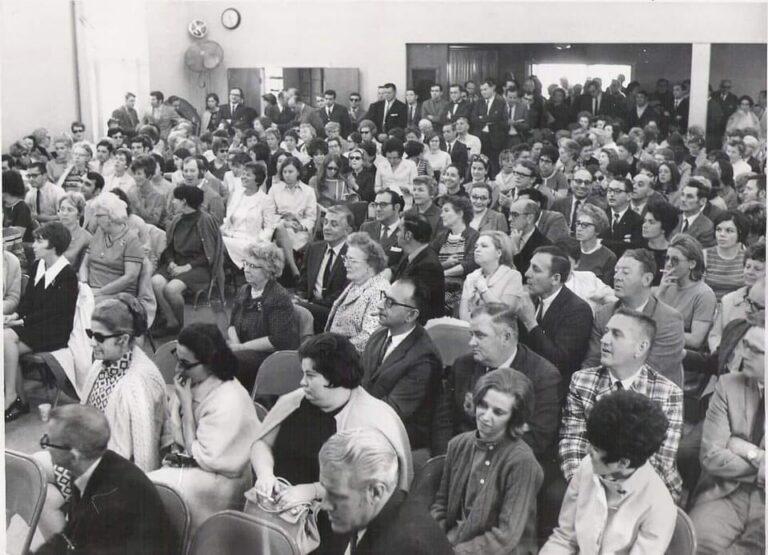
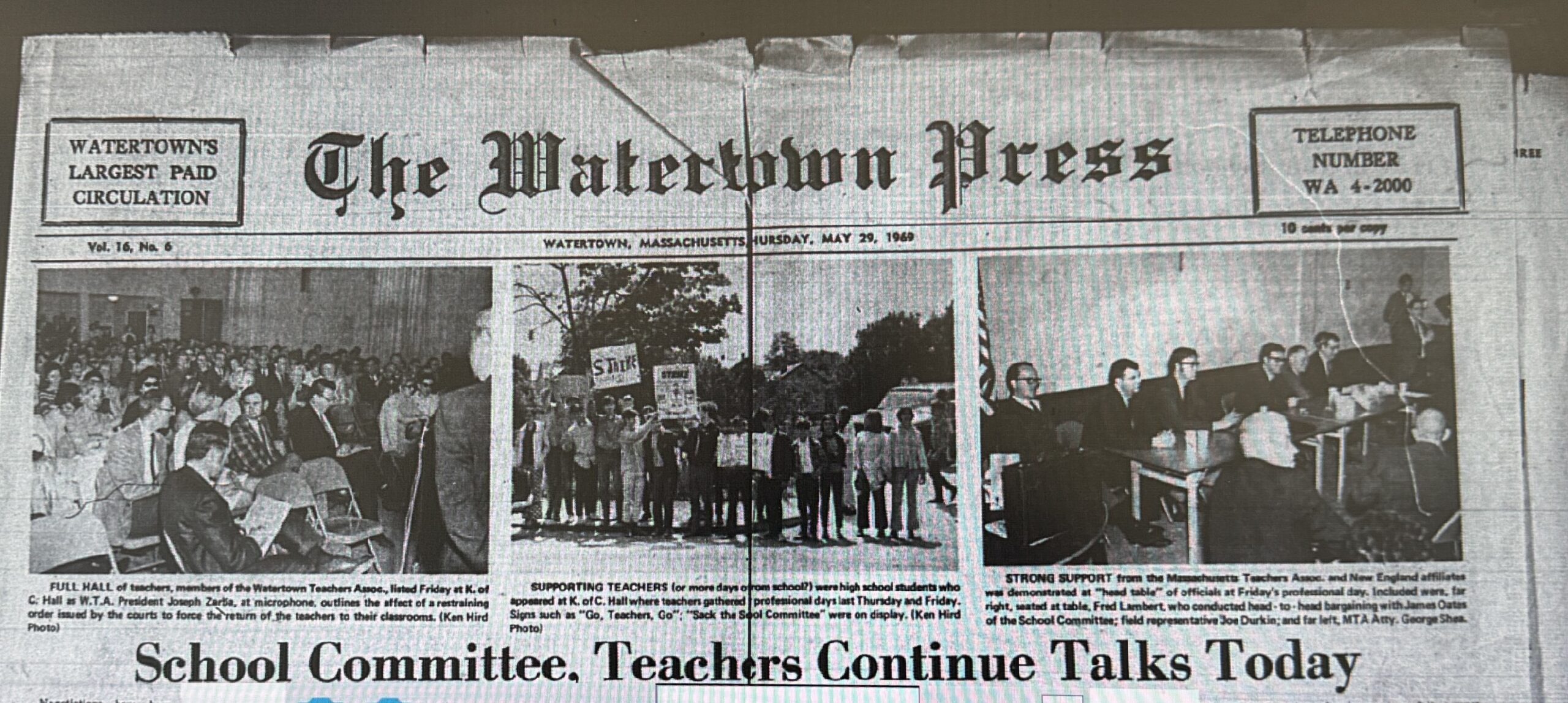
The Watertown Teachers Association — now Educators Association — is likely the first MTA local to hold a strike that impacted the school day. Most of Watertown’s teachers boycotted school on May 22-23, 1969, to protest stalled contract talks and a perceived lack of respect by the school committee.
The WTA avoided the word “strike,” describing the walk outs as a “holiday” or “professional day” action, though they occurred while schools were in session. Administrators sent the students home on May 22 when they realized that only 33 teachers and 12 administrative personnel and principals were on duty in 11 schools serving 6,300 students.
The MTA did not write about the action in its own publication, The Massachusetts Teacher, or refer to it as a strike in subsequent articles. The reluctance to call this and other early one- or two-day walkouts a strike was no doubt because striking by public employees was both illegal and controversial. Since collective bargaining was so new in 1969, the consequences of breaking the law were not yet known. Even the media avoided the word “strike.” When it was over, the headline in The Boston Globe read, “Holidays End in Watertown,” (May 24, 1969).
Although the last day of the strike was May 23, a settlement wasn’t reached until the summer. Meanwhile, the district sought to dock the teachers’ pay for the time they were out.
Animosity more than money appears to have driven the teachers to act. The Globe reported, “Joseph Zarba, president of the Watertown Teachers Association, which represents 325 instructors, said the wage increases sought by teachers is secondary. He charged that the teachers were being treated like second class citizens and slaves by the school committee.”
That said, salary concerns were among the issues disputed during the strike, including differences over a delay in the retroactivity of $100 of the agreed increase.
The district sought and received a court order demanding that the teachers go back to work. The Globe quoted Zarba saying to members, “A bayonet has been placed at my back as a result of the court order and if you don’t go back I’ll be in jail.”
To avoid arrest, Zarba went into hiding, according to his daughter, Teresa Sugrue. The Globe reporter noted, “Zarba had successfully dodged deputy sheriffs Thursday as they attempted to issue an earlier restraining order from the Middlesex Superior Court.”
Four months after the Watertown action, members of the New Bedford Educators Association walked off the job for nine days, generating a lot of press and acknowledgement by the MTA that this action was indeed a strike.
“It began Sept. 2, when teachers at an early morning meeting shouted their approval of a motion they boycott an orientation day scheduled by the school administration,” wrote Russell P. Burbank in The Massachusetts Teacher. “It was a full-fledged strike the next day, when the teachers did not show up for the opening day of classes.”
Additional Photos